
A lot of us feel good when we put the recycling bin out on garbage day, confident we are helping the environment. But did you know that organised crime is a big part of this industry? Could terrorist groups get involved too?
Borealis talks with Virginia Comolli, author of a new paper “Plastic for Profit: tracing illicit plastic waste flows, supply chains and actors“.
If the ins and outs of terrorism, extremism, national security and public safety are of interest to you, subscribe to receive free content by former Canadian intelligence analyst and author Phil Gurski on these issues.
Canadian Intelligence Eh
In a world of multiple voices and opinions it can be very hard to know where to turn. One choice is to look to those who actually worked in counter-terrorism in the national security world. In these half-hour podcasts, 30-year Canadian intelligence veteran Phil Gurski is joined by a fascinating array of individuals with something meaningful to say about these issues as they provide insight into what they mean and what we need to do about them.
Listen on Apple podcast
Listen on Spotify
Watch on Youtube
Listen on Buzzsprout
Listen on iHeartRADIO
List all episodes

About my guest Virginia Comolli
Virginia Comolli is the research manager for the GI-TOC programme ‘Anticipating and disrupting environmental crime in the globalized economy’, which focuses on South East Asia and central and East Africa. Before joining the GI-TOC, she was head of the Conflict, Security and Development programme at the International Institute for Strategic Studies.

About the host Phil Gurski
Phil Gurski is the President and CEO of Borealis Threat and Risk Consulting Ltd. and Programme Director for the Security, Economics and Technology (SET) hub at the University of Ottawa’s Professional Development Institute (PDI). He worked as a senior strategic analyst at CSIS (Canadian Security Intelligence Service) from 2001-2015, specializing in violent Islamist-inspired homegrown terrorism and radicalisation.
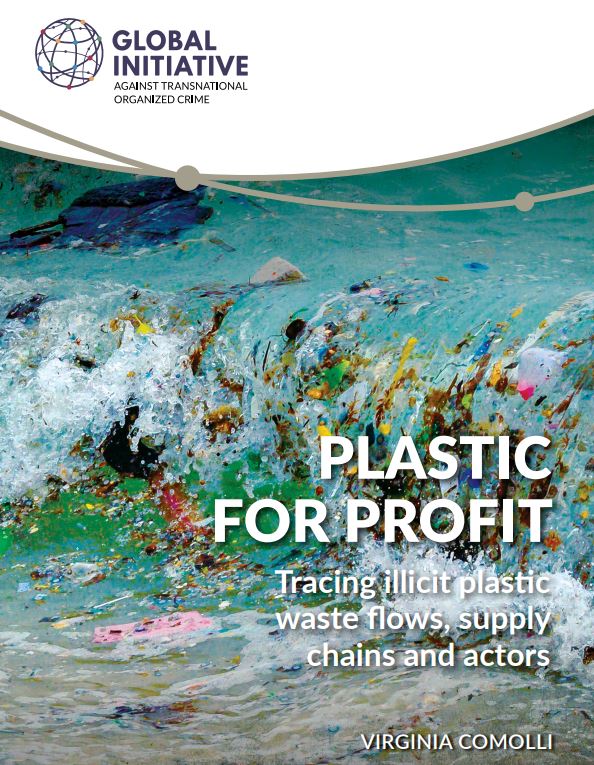
Plastic for Profit: tracing illicit plastic waste flows, supply chains and actors
The shipping of different types of waste from Western countries to Asia and Africa has been an ongoing phenomenon since the 1970s. In fact, evergrowing waste production in Europe and North America, coupled with very limited waste-disposal capacity, has now made the export of waste a necessity. This has highlighted a great power imbalance in what has been labelled ‘waste colonialism’.
In 2018, tired of being used as a dumping ground for nearly half of the world’s waste, China introduced an import ban that sent shock waves across the recycling world and prompted the redirection of waste flows. Now, South East Asia has become by far the largest recipient of waste from Europe and North America as well as from Australia.
Listen to more episodes:

What is going on in the US intelligence community?
Episode 359 – The Trump administration seems to be undermining expertise If there is one thing I…
Remember Carlos the Jackal?
Episode 358 – Why it is important to recall earlier eras of terrorism On some occasions a…
What is the state of jihadi violence in Mozambique?
Episode 357 – Southeast Africa has been beset by jihadis for at least two decades Mozambique does…
Does Antifa actually exist?
Episode 356 – We do NOT need more terrorist group listings! In its never-ending quest to spread…

